
In an era where digital technologies shape almost every aspect of our lives, educational discussions about digital inclusion often begin with questions of access but rarely extend to the more challenging issue of agency. Do students have a device? Can they connect to the internet? Do they have the necessary digital skills? These are the questions that frequently dominate policy agendas and institutional strategies. They are, of course, important. Yet once concerns about access and basic competence are addressed, a different challenge emerges: how do we enable students, as citizens, to participate meaningfully, confidently, and critically online?
This is, I would argue, a positive problem to have. It shows that we have moved beyond seeing inclusion as merely a matter of provision and towards a richer understanding of participation. However, agency cannot be assumed to follow automatically from access. It requires deliberate and sustained effort from educators, institutions, policymakers, parents and communities. It demands that we rethink what genuine digital inclusion means, not simply ensuring that students can use technology in school, but creating the conditions for them to exercise voice, make informed choices, create expressions of what they know, and positively influence the digital environments with which they engage.
In this sense, I argued at this year’s ALP Institute’s Digital Technology and AI Conference that digital inclusion is not simply about providing technology. It is about ensuring that those whom we support can participate meaningfully online.
Central to this perspective is the recognition that meaningful digital participation depends on understanding the digital logics that shape online environments, alongside the development of digital cultural knowledge. They enable individuals not only to navigate digital spaces but also to understand the norms, values, expectations, and power relations that shape participation. Through this combination of critical understanding and cultural awareness, students can be better equipped to engage thoughtfully, responsibly, and meaningfully in digital contexts.
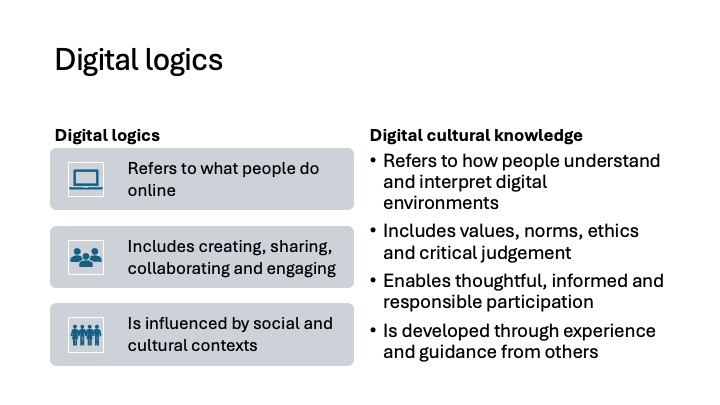
This distinction has significant implications for curriculum design. Too often, digital education focuses on operational skills, i.e., how to use software, access information, or submit work online.
To address these challenges, I propose a more human-centred vision of digital inclusion through curriculum. This involves creating learning experiences that are discipline context-sensitive, responsive to digital cultures, critically dialogic, participatory, and creative (more as an act of creation rather than an artistic endeavour). This provides opportunities for students to become active contributors and creators, just like social media features do.
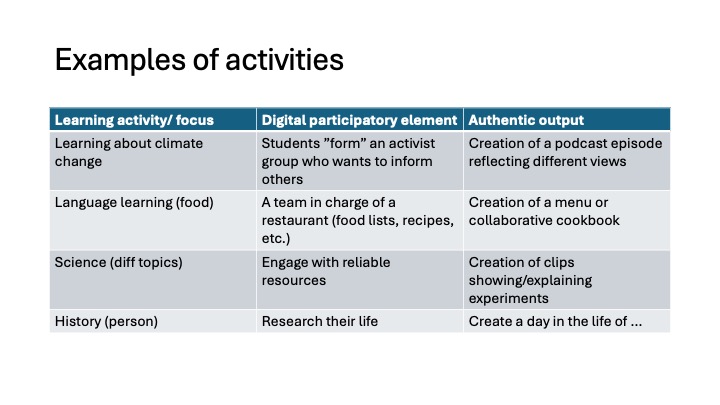
Practical examples illustrate this approach. Students learning about climate change might embody the role of digital activist group by developing an informed opinion about the subject which can then be manifested through the creation of a podcast using a format of their choice. Language learners studying “food” vocabulary could collaborate to create a cookbook by sharing family recipes in the target learning language and the stories and cultural aspects that surround such culinary feats. Science students might produce explanatory videos based on reliable sources and simulations they create on given topics, while history students could create “a day in the life” digital narratives of a historical figure, negotiating what would be appropriate to share and what to omit as part of that person’s digital footprint. In each case, technology supports creation/creativity, participation, and knowledge construction rather than merely content consumption.
The idea is to challenge ourselves to rethink what it means to prepare ourselves as well as students for a digital world. Digital inclusion should not be measured by access alone, but by the extent to which students can reap the positive effects of the online world as also a space of learning and creation of knowledge.
Discover more from Digital Literacies Network
Subscribe to get the latest posts sent to your email.
Subscribe to stay updated on the latest research and projects from the Digital Literacies Network.